
Why Dorm Mattresses Are Bad (And What That Means for You)
Dorm mattresses are designed to be cleanable, fire-resistant, and durable enough to survive a decade of college students. Comfort is roughly the fifth priority on the spec sheet — after cost, after sanitation, after meeting institutional bedding regulations. The result is what you would expect: a 6 to 8 inch slab of firm, dense institutional foam, wrapped in a vinyl-coated cover that feels like a tarp and does not breathe. The cover is intentional; it lets housekeeping wipe down the mattress between students. It also means you sweat at night and the mattress feels plasticky against your skin even through a sheet.
The other half of the problem is age. A dorm mattress sits on a frame for 6 to 8 years on average before it gets replaced — sometimes longer at schools with tight maintenance budgets. By the time you sleep on it, it has been used by at least 4 or 5 students before you, often more. Foam compresses with use; institutional foam, despite the marketing, is not exempt. Sagging hot spots, soft corners, and an overall lack of support are normal.
The fix is a mattress topper. For under $60 in most cases, a topper is the single most impactful comfort upgrade you can make in a dorm room. It matters more than a fancy pillow ($30 to $100, marginal benefit). It matters more than premium sheets ($60 to $150, mostly aesthetic). The topper changes the actual surface you are sleeping on. Once you have one, every other piece of bedding stacks on top of it; without one, none of the other upgrades make a real difference.
What Type of Mattress Topper Is Best for a Dorm?
Three categories cover almost every option on the market.
Memory foam, 2 to 3 inches. The best overall choice for most students. Memory foam conforms to your body, distributes weight away from pressure points, and resists compression for years rather than months. A quality Twin XL memory foam topper runs $40 to $80. Look for "gel-infused" or "open cell" versions if you sleep hot, since standard memory foam traps heat. Density matters more than thickness: a 2-inch topper at 4-pound density supports better than a 3-inch topper at 2-pound density.
Egg crate foam. The cheapest option at $15 to $25 for a Twin XL. Egg crate adds noticeable cushioning compared to a bare dorm mattress and improves airflow because of the bumpy surface. The downside is that it compresses fast — pressure points flatten within 3 to 6 months and the topper loses most of its benefit by the second semester. Useful as a budget choice for a single school year, or as a sleep upgrade for a guest bed. Not a long-term solution.
Pillow-top or fiberfill. A fluffy, quilted topper filled with polyester fiberfill or down alternative. Adds warmth and a soft, plush feel — very good for cold dorms (older Northeast halls without modern heating, mountain campuses, anywhere with single-pane windows). $30 to $70 for a Twin XL. The trade-off is that fiberfill flattens over time and is harder to fluff back than memory foam recovers from compression. Also less supportive: pillow-top toppers add softness on top, but the underlying mattress sag still pushes through.
For most students in most dorms, the answer is a 2 or 3 inch memory foam topper with a removable washable cover. The 3-inch version is worth the upgrade if your fitted sheet has deep enough pocket depth (12 to 15 inches) to accommodate it.
| Topper | Best for | Why it works in a dorm |
|---|---|---|
| Linenspa 2″ Gel Memory Foam | Best overall | Gel-infused foam that conforms and sleeps cool, at a great price |
| Sleepyhead 2″ Cooling | Hot sleepers | Cooling gel foam with a removable, washable cover |
| Linenspa 3″ Gel Memory Foam | Max comfort | The plushest — needs a deep-pocket sheet to fit |
| Best Price 1.5″ | Budget / loft | Low-profile, ventilated, cheapest — easy on a lofted bed |

Linenspa 2″ Gel Memory Foam Topper (Twin XL)
Price: $42.99Amazon price as of Sep 15, 2026, may vary
Our top pick, and the one on the main dorm checklist. Two inches of gel-infused memory foam that conforms to you and pulls heat away, CertiPUR-US certified, at a price that makes the single biggest comfort upgrade a dorm mattress can get. Plush but still supportive.
- Thickness: 2 in
- Foam: Gel-infused memory foam
- Cert: CertiPUR-US
- Best for: The all-around pick
Affiliate link — we may earn a small commission at no cost to you.
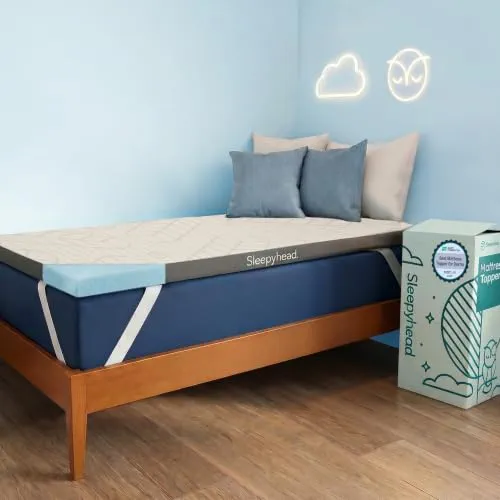
Sleepyhead 2″ Cooling Gel Topper (Twin XL)
Price: $299.00Amazon price as of Sep 15, 2026, may vary
When the dorm runs warm, this adds a removable, machine-washable cover over 2 inches of cooling gel memory foam — so you get the pressure relief without the heat trap standard foam creates. CertiPUR-US, sized true to a Twin XL, and backed by a long warranty.
- Thickness: 2 in
- Cooling: Gel foam + washable cover
- Cert: CertiPUR-US
- Best for: Warm rooms / hot sleepers
Affiliate link — we may earn a small commission at no cost to you.

Linenspa 3″ Gel Memory Foam Topper (Twin XL)
Maximum cushion. Three inches of gel memory foam is the biggest comfort jump you can make on a thin institutional mattress — just confirm your fitted sheet has a deep enough pocket (12–15 in) to fit it. This is the plusher, 3-inch sibling of our top pick, from the same Linenspa lineup sold specifically as a dorm room essential — CertiPUR-US certified and gel-infused so it sleeps cooler than standard foam. The pick when comfort is the priority and your sheets can handle the height.
- Thickness: 3 in — plushest
- Foam: Gel-infused memory foam
- Cert: CertiPUR-US
- Note: Needs deep-pocket sheets
- Best for: Max comfort
Affiliate link — we may earn a small commission at no cost to you.
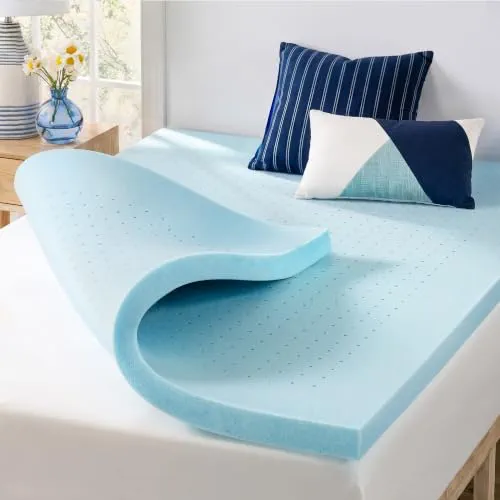
Best Price 1.5″ Ventilated Gel Topper (Twin XL)
Price: $25.99Amazon price as of Sep 15, 2026, may vary
The budget and low-profile pick. An inch and a half of ventilated, gel-infused memory foam adds real cushion for the least money, and the thinner profile is the safe choice for a lofted bed, where a thick topper makes climbing in and out awkward. CertiPUR-US certified.
- Thickness: 1.5 in — low profile
- Foam: Ventilated gel foam
- Cert: CertiPUR-US
- Best for: Budget / lofted beds
Affiliate link — we may earn a small commission at no cost to you.
What Size Mattress Topper Do You Need?
Twin XL: 38 inches wide by 80 inches long. This matches the standard dorm mattress size and is the only size that fits properly. Do not buy a standard Twin topper (38" × 75"); it will be 5 inches too short and leave the foot of the mattress uncovered, which means the part of your body most likely to need cushioning at the end of a long day is sleeping on bare institutional foam.
Thickness is the other decision. 2 inches is the minimum thickness that makes a noticeable difference — anything thinner is essentially a thick mattress pad and will not transform how the bed feels. 3 inches is the sweet spot. You get meaningful cushioning, the topper still fits under most deep-pocket fitted sheets (12 to 15 inch pocket depth), and the bed remains a manageable height for making and for lofted configurations. 4 inches exists and adds even more cushioning, but creates real problems: the bed becomes harder to make (you cannot tuck a flat sheet around 12+ inches of stack), the sleep surface sits awkwardly high on a lofted frame, and you need 15+ inch pocket sheets which are harder to find and more expensive.
If you are sleeping on a lofted bed, lean toward 2 inches. If you are sleeping on a standard-height bed and have deep-pocket sheets ready, 3 inches is the right choice. Skip 4 inches in a dorm context.
🎓 Building your dorm checklist?
DormMoveIn.com has verified room dimensions, what's already in your room, and what's banned — for Brown, Penn State, UC Berkeley, and more.
Start Your Checklist →What to Look for When Buying
Four features separate a good dorm topper from a bad one.
CertiPUR-US certification. This is a third-party certification that tests foam for restricted chemicals, low VOC emissions, and overall safety. In a 130 sq ft dorm room with limited airflow and often no operable windows, off-gassing matters. A non-certified foam topper can release a chemical smell for days or weeks after unboxing — bad for sleep, bad for headaches, bad for your roommate. CertiPUR-US foam still has a faint new-foam smell for the first 24 to 48 hours, but it dissipates quickly and the chemicals being released are tested at safe levels.
Removable, washable cover. A topper is going to absorb sweat, the occasional spilled drink, and whatever else accumulates on a college bed. Without a removable cover, you cannot clean it — and a foam topper itself cannot go in the washer. Look for a zippered fabric cover that comes off completely and can be machine washed. Bonus points for a cover that includes a non-slip bottom layer.
Non-slip bottom or anchor straps. A topper that slides around on the mattress is worse than no topper at all. The two solutions are a textured non-slip bottom (rubberized dots or a grippy fabric) or elastic anchor straps that wrap around the four corners of the mattress like a fitted sheet. Anchor straps are more secure; non-slip bottoms are simpler and cheaper. Either works for most students, but if you toss and turn a lot, get the anchor strap version.
Density and recovery time. For memory foam, look for density listed as 3-pound or higher. Lower-density foam (under 3 lb) compresses fast and loses shape within months. Recovery time — how quickly the foam returns to its original shape after you stand up — should be under 30 seconds for a quality topper. Cheaper foams can take minutes, which means you sleep in your own indentation night after night.
Memory Foam Twin XL Toppers for Dorms
Affiliate link — we may earn a small commission at no cost to you.
Mattress Topper FAQs
Do I need a mattress topper for a dorm bed? Not required, but highly recommended. Dorm mattresses are typically firm 6–8" foam that has seen years of use. A Twin XL topper is the single biggest sleep quality upgrade you can make for under $50 — it changes the actual surface you sleep on, which no pillow or sheet upgrade can do.
What size mattress topper for a dorm bed? Twin XL: 38" × 80". This matches the standard dorm mattress size. Do not buy a regular Twin topper — it will be 5 inches too short and leave the foot of the bed uncovered. The width is identical between Twin and Twin XL, so width is not the issue; length is the only dimension where the wrong size shows up.
How thick should a dorm mattress topper be? 2–3 inches is the sweet spot for dorm use: meaningful cushioning without making the bed too high for lofted configurations or too hard to make. 4" exists but is less practical for dorms — it requires very deep pocket sheets (15+ inches), makes lofted beds awkwardly high, and creates problems with tucking a flat sheet over the stack.
Can I bring a mattress topper to college? Yes. Unlike personal mattresses, mattress toppers are permitted at virtually all schools. Check that yours is CertiPUR-US certified to minimize off-gassing in a small room — non-certified foam can smell strongly for days after unboxing, which is uncomfortable in a dorm with limited airflow.
Related Guides
Twin XL Sheets for Dorms: What Fits, What Doesn't, and What to Buy
Not all Twin XL sheets fit dorm beds the same way. Here's what to look for, what to avoid, and the best sheet sets for college move-in.
Best Dorm Bedding Sets (Twin XL): What to Buy and What to Skip
Shopping for dorm bedding sets in Twin XL? Here's what actually fits, what's worth buying, and what to skip before move-in day.
Dorm Bed & Mattress Dimensions: Every Size, by School
Dorm beds and mattresses are Twin XL, but thickness varies by school. Here's every size, what bedding fits, and how to measure before you buy.